
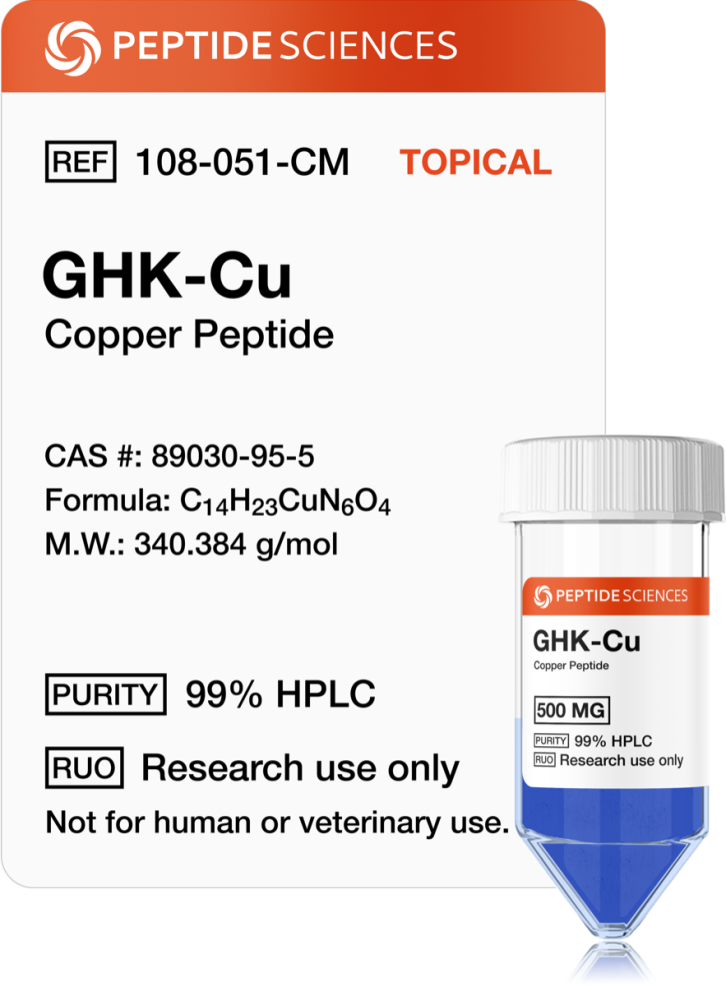
GHK-Cu 500mg (Copper Peptide) (Topical)
Peptide Sciences Shop is the best place to buy peptides online. Recognized among legit peptide suppliers USA, we make it secure to order research peptides online. Whether you need to buy peptides for weight loss or advanced metabolic studies, we provide guaranteed 99% purity. Researchers can safely buy semaglutide online and buy tirzepatide peptides online through our platform. We offer the cheapest online GLP-1 reagents for your lab. When you need to buy GLP-1 online over the counter for in-vitro trials, choose us. To buy peptides online USA with uncompromising quality, trust Peptide Sciences Shop.
$330.00
Buy GHK-Cu (Copper Peptide) 500mg (Topical) Online USA
Buy GHK-Cu (Copper Peptide) 500mg (Topical) Online in USA from the official peptide sciences shop. Whether you need to buy peptides for weight loss or advanced metabolic studies, we provide guaranteed 99% purity. Researchers can safely buy semaglutide online and buy tirzepatide peptides online through our platform. We offer the cheapest online GLP-1 reagents for your lab. When you need to buy GLP-1 online over the counter for in-vitro trials, choose us. To buy peptides online USA with uncompromising quality, trust Peptide Sciences Shop GHK-Cu is a naturally occurring peptide first isolated from human blood plasma. It has since been identified in urine and saliva as well. Research into GHK-Cu has found the short peptide to have substantial benefits in wound healing and immune function. It has anti-aging properties and has been found to suppress free-radical damage, increase protein synthesis, fight bacteria, and increase the health of skin and skin fibroblasts.
Structures
Sequence: Gly-His-Lys.Cu.xHAc
Molecular Formula: C14H23CuN6O4
Molecular Weight: 401.91 g/mol
PubChem CID: 73587
CAS Number: 89030-95-5

Source: PubChem
Source: PubChem
GHK-Cu Research
1. GHK-Cu and Skin Healing
GHK-Cu is a natural part of human blood and, as such, has been found to play an integral role in skin regeneration pathways. Research in skin cultures has found that GHK stimulates the synthesis and breakdown of collagen, glycosaminoglycans, and other extracellular matrix components like proteoglycans and chondroitin sulfate. At least part of this effect is mediated through the positive recruitment benefits that GHK-Cu has on fibroblasts, immune cells, and endothelial cells. The peptide draws these cells to the site of injury and appears to coordinate their activity in repairing the damage
GHK-Cu is a common component of skin-care and cosmetic products. It improves elasticity of the skin while tightening and firming. It has also been shown to reduce damage due to sunlight, reduce hyperpigmentation, and reduce the appearance of fine lines and wrinkles. The ability of GHK-Cu to modulate collagen synthesis is important in reducing the appearance of scars, preventing hypertrophic healing from taking place, smoothing rough skin, and repair the structure of aged skin. These roles of GHK-Cu are mediated partly though its ability to boost levels of transforming growth factor-Β. It is likely that the peptide works through several different biochemical pathways and that it has effects and the level of gene transcription
Research in mice shows that GHK-Cu increases the rate of healing following burn by as much as 33%. It appears that besides recruiting immune cells and fibroblasts to the site of injury, GHK-Cu also encourages the growth of blood vessels[4]. Burned skin is often slow to regrow blood vessels due to the cauterization effect, so these findings open up a new pathway for improving wound care in burn units and accelerating healing.
2. GHK-Cu and Bacteria
The invasion of tissue by foreign pathogens is one of the primary reasons that wounds are slow to heal or do not heal at all. Bacterial and fungal infections are particularly problematic in burn patients and in those with compromised immune systems (e.g. diabetes, HIV). GHK-Cu, when combined with certain fatty acids, creates a potent antimicrobial compound that is active against a number of bacteria and fungi known to complicate wound healing.
Research in diabetic patients has shown that GHK-Cu is superior to standard care regimens alone in the treatment of diabetic ulcers. Patients given both standard care and GHK-Cu showed a ~40% increase in wound closure and a 27% decrease in rates of infection compared to control groups. Similar results were seen in patients with ischemic open wounds[7].
3. GHK-Cu, Cognition and Nervous System Function
The death of neurons due to degenerative diseases like Alzheimer’s is poorly understood. This makes it difficult to develop treatments, and those that are available are generally of limited efficacy. Research, however, suggests that GHK-Cu can counter the age-associated decline in neuron function that often underlies these diseases. Research shows that GHK-Cu can improve angiogenesis in the nervous system, boost nerve outgrowth, and reduce inflammation in the central nervous system. There is even evidence that GHK-Cu can reset pathological gene expression and help to recreate a state of health in dysfunctional systems.
GHK-Cu is found in high concentrations in the brain, though levels of the peptide decline with age. There is a thought, among scientists, that GHK-Cu may protect nervous system tissues against natural insults such as gene dysregulation and that it is the decline in GHK-Cu with age, and not the onset of new disease processes, that actually leads to neurodegeneration.

Reviews