
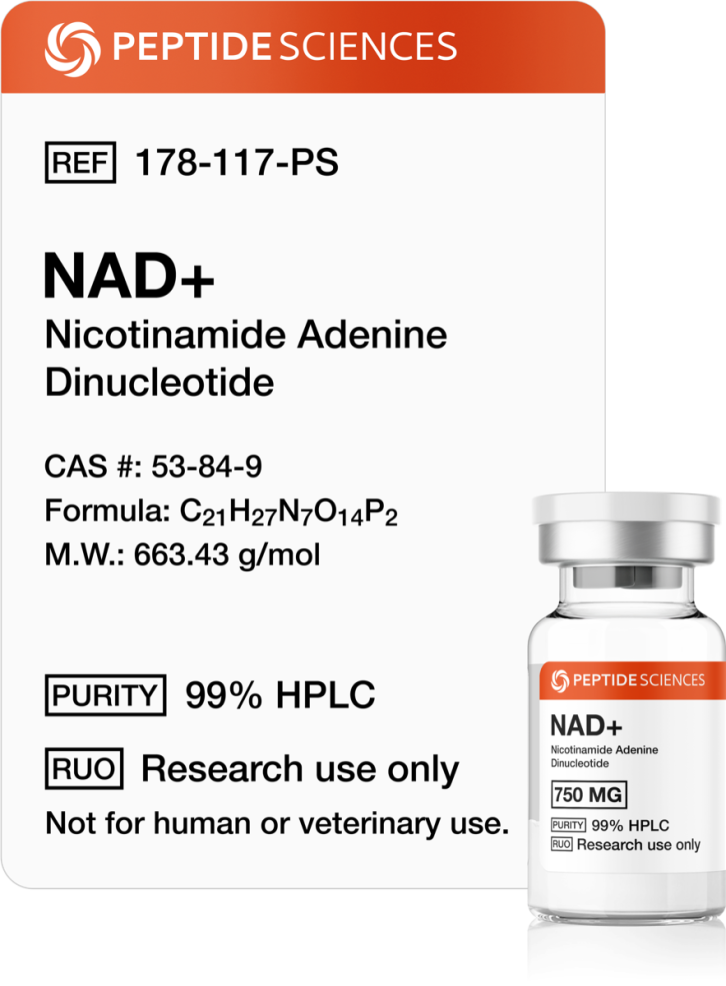
NAD+ 750mg
Peptide Sciences Shop is the best place to buy peptides online. Recognized among legit peptide suppliers USA, we make it secure to order research peptides online. Whether you need to buy peptides for weight loss or advanced metabolic studies, we provide guaranteed 99% purity. Researchers can safely buy semaglutide online and buy tirzepatide peptides online through our platform. We offer the cheapest online GLP-1 reagents for your lab. When you need to buy GLP-1 online over the counter for in-vitro trials, choose us. To buy peptides online USA with uncompromising quality, trust Peptide Sciences Shop.
$300.00
Buy NAD+ 750mg Online in USA
Buy NAD+ 750mg Online in USA from the official peptide sciences shop. Whether you need to buy peptides for weight loss or advanced metabolic studies, we provide guaranteed 99% purity. Researchers can safely buy semaglutide online and buy tirzepatide peptides online through our platform. We offer the cheapest online GLP-1 reagents for your lab. When you need to buy GLP-1 online over the counter for in-vitro trials, choose us. To buy peptides online USA with uncompromising quality, trust Peptide Sciences Shop. NAD+, short for nicotinamide adenine dinucleotide, is the oxidized form of NADH. It’s main biological function is to carry electrons from one biochemical reaction to another, acting to shuttle energy within a cell and, in certain conditions, to extracellular locations as well. NAD+ also plays roles in enzyme activation/deactivation, posttranslational modification of proteins, and cell-to-cell communication. As an extracellular signaling molecule, NAD+ has been found to be released from neurons in blood vessels, the bladder, the large intestine, and from certain neurons in the brain.
NAD+ Structure

Source: PubMed
Sequence: N/A
Molecular Formula: C21H27N7O14P2
Molecular Weight: 663.43 g/mol
PubChem CID: 925
CAS Number: 53-84-9
Synonyms: nicotinamide adenine dinucleotide, beta-NAD, NAD, Endopride
NAD+ Effects
- NAD+ is best thought of as a support molecule that is essential to cellular metabolism as well as extracellular communication. Research shows that NAD+ plays important roles in energy conversion, DNA repair, immune defense, and circadian cycles. Levels of the cofactor, however, are sensitive to disease state as well as age. NAD+ as the following effects that decline as a result of natural age-related decreases in the levels of the cofactor.
- NAD+ activates sirtuins and other enzymes, liked Poly-ADP-ribose polymerases, involved in DNA repair and inflammatory processes. Sirtuins are the same enzymes linked to the life-extending benefits of calorie restriction.
- NAD+ controls the production of the protein PGC-1-alpha, which protects neurons and other cells in the central nervous system from oxidative stress. Research in mice shows that this particular effect may be linked to improved memory, particularly with aging.
- In mouse models, NAD+ helps to protect blood vessels against age-related hardening and the deposition of atherosclerotic plaques. In some studies, the cofactor even helps to reverse age-related dysfunction of the aorta.
- Mice given NAD+ show increased rates of metabolism and improved lean body mass.
- Increased NAD+ levels can increase muscle strength and endurance in older mice.
- NAD+ has been linked to extracellular signaling, particularly for smooth muscle. It may be of benefit in GI function. This effect is likely responsible for NAD+ benefits on blood pressure[1], [2].
NAD+ Additions and Synergies
- Because NAD+ is a naturally occurring molecule, it is easy to combine with other supplements to obtain synergistic effects with few to no side effects. This is particularly true when NAD+ is combined with other natural supplements. Research in mice bears this out in several specific cases.
- Combining NAD+ and high-dose biotin may help to combat pain and reduce levels of pain.
- CoQ10, another cofactor in energy metabolism, may work synergistically with NAD+ to improve neurological function and protect the central nervous system against oxidative stress[3].
- Reservatrol and NAD+ make work together to reduce oxidative damage, lower inflammation, and help to lower levels of LDL (a.k.a. bad) cholesterol. They may also work together to protect against diabetes and neurodegenerative disease[4].
- Vitamins B1, B2, and B6 help to boost NAD+ salvage. When combined with NAD+ supplementation, they may help to improve overall NAD+ levels.
- Combining NAD+ with mitochondrial and energy supplements, such as creatine and alpha-lipoic acid, may boost antioxidant and anti-aging effects.
NAD+ Research
Anti-Aging Research and NAD+
One of the primary results of the standard aging process is a decline in both the quality and activity of mitochondria. Mitochondria are the body’s power plants, producing the energy for everything from neuron firing to digestion and muscle function. A decline in mitochondrial functioning has been associated with normal aging, but is also a factor in a number of age-related disease processes. Research shows that mitochondrial aging contributes to cellular senescence, inflammation, and even changes in stem cell activity that reduce rates of healing and make it harder for the body to recover from injury in old age[5].
According to Nuo Sun of the Heart, Lung, and Blood Institute of the National Institutes of Health, mitochondria cannot simply be viewed as bioenergetics factories, but “rather as platforms for intracellular signaling, regulators of innate immunity and modulators of stem cell activity.” He goes on to explain that “mitochondria can be linked to a wide range of processes associated with aging including senescence, inflammation, as well as the more generalized age-dependent decline in tissue and organ function.” In other words, mitochondria are the lynch pin of cellular aging and understanding how to protect their function is a necessary first step in understanding how to slow, stop, or even reverse the aging process.
New research suggests that at least some of the age-related decline seen in mitochondria can be reversed through dietary supplementation with NAD+. This function of NAD+ was uncovered, or at least made popular in research circles, by David Sinclair of Harvard University. Sinclair is the same researcher who uncovered the anti-aging effects of reservatrol (a component of red wine). In 2013, Sinclair revealed that mitochondria in the muscle of mice could be restored to a more youthful state via injection of a precursor to NAD+
Research completed in 2013 showed that declining levels of NAD+ leads to a pseudohypoxic state within cells. This, in turn, interrupts the normal signaling that takes place between the nucleus, where DNA resides, and the mitochondria. By supplementing old mice with NAD+, mitochondrial function is restored and the communication commences again[7].
At least part of the reason that NAD+ helps to offset the effects of aging is that it activates SIRT 1 function in the nucleus and prevents the normal age-related decline in expression of this particular gene. SIRT 1 is a gene encoding a protein known as sirtuin 1 (short for NAD-dependent deacetylase sirtuin-1). Sirtuin 1 is an enzyme that plays important roles in regulating proteins involved in cellular metabolism and processes linked to stress, longevity, and inflammation.
Reviews